

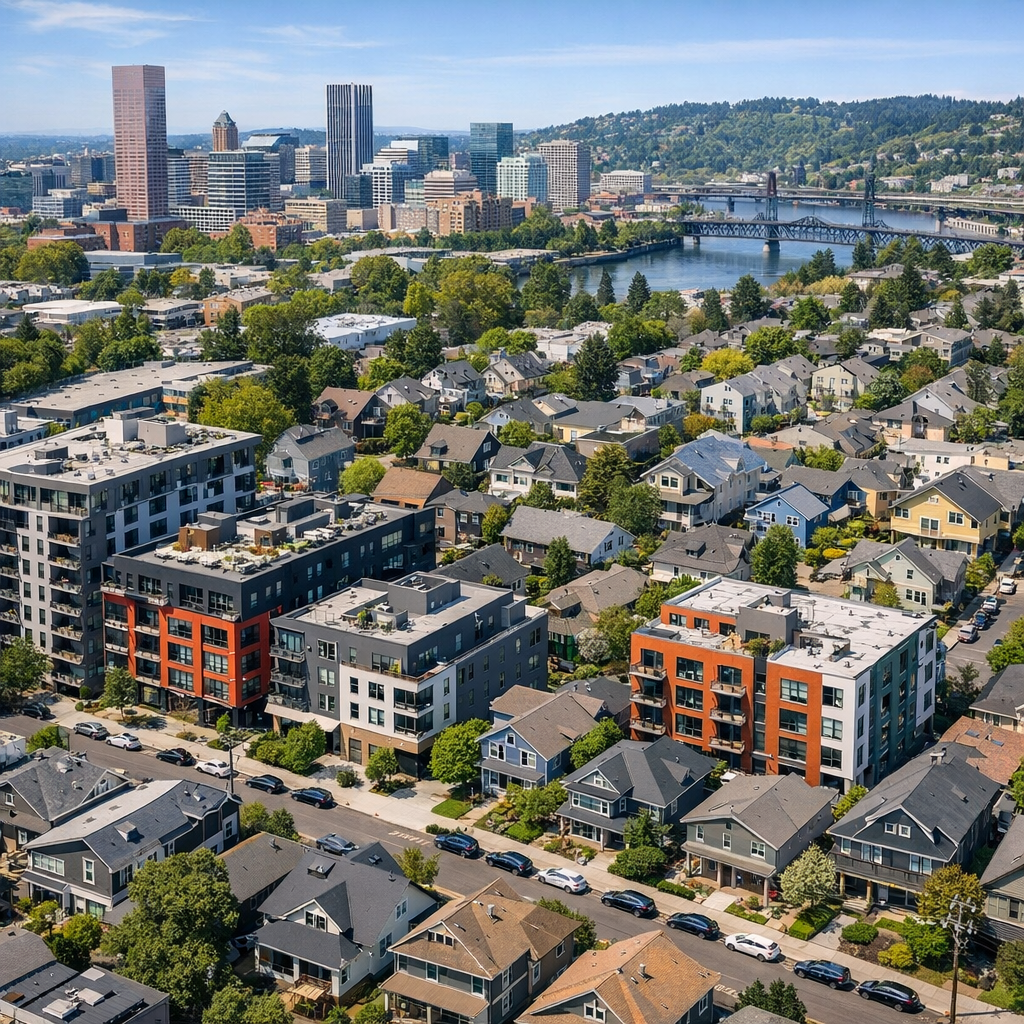
Portland’s housing market is experiencing notable shifts, with trends in home prices, rental rates, and development projects influencing the city’s real estate landscape.
Current Housing Market Trends
As of April 2026, the average home value in Portland stands at $538,687, reflecting a slight decrease of 0.9% over the past year. Homes are typically going pending in around 10 days, indicating a competitive market. The median sale price is $508,633, with a median list price of $508,300. Approximately 34.5% of sales are closing above the list price, while 45.9% are below, suggesting varied negotiation dynamics. Source
Rental Market Dynamics
Portland’s rental market has seen a 1.8% year-over-year decrease in median rent prices, bringing the average to approximately $1,600 per month. Despite this decline, housing remains costly for many residents. The reduction in rent is the largest among West Coast regions, yet affordability challenges persist due to high construction costs and limited new development. Source
Notable Development Projects
Several development projects are underway to address housing needs:
Lents 92H
Located along SE 92nd Avenue in East Portland, Lents 92H is a two-phase housing development comprising 219 residential units. The project emphasizes pedestrian-friendly design and includes a mix of studios to three-bedroom apartments. The first phase features 171 units with ground-floor commercial space and shared amenities. Source
Argyle Gardens
Completed in 2020, Argyle Gardens offers 72 affordable housing units for individuals transitioning out of houselessness. Utilizing modular construction techniques, the development includes co-living models and earned an Earth Advantage Platinum rating for its sustainability features. Source
Dekum Court Affordable Housing
Set in Portland’s Concordia neighborhood, Dekum Court is a redevelopment project providing 187 affordable units for residents earning at or below 60% of the median family income. The design focuses on community engagement, pedestrian connections, and access to shared outdoor spaces. Source
Middle Housing Initiatives
Portland has been recognized for promoting “middle housing”—including duplexes, fourplexes, accessory dwelling units, and cottage clusters—to address its housing shortage. Since the 2021 adoption of the Residential Infill Project, around 23% of new homes have been classified as middle housing. However, recent data indicates a sharp decline in overall housing construction, attributed to economic challenges such as high interest rates and inflation. Despite this slowdown, local realtors report ongoing demand for middle housing. Source
Understanding these trends and developments is crucial for residents and potential homebuyers navigating Portland’s evolving housing market.