

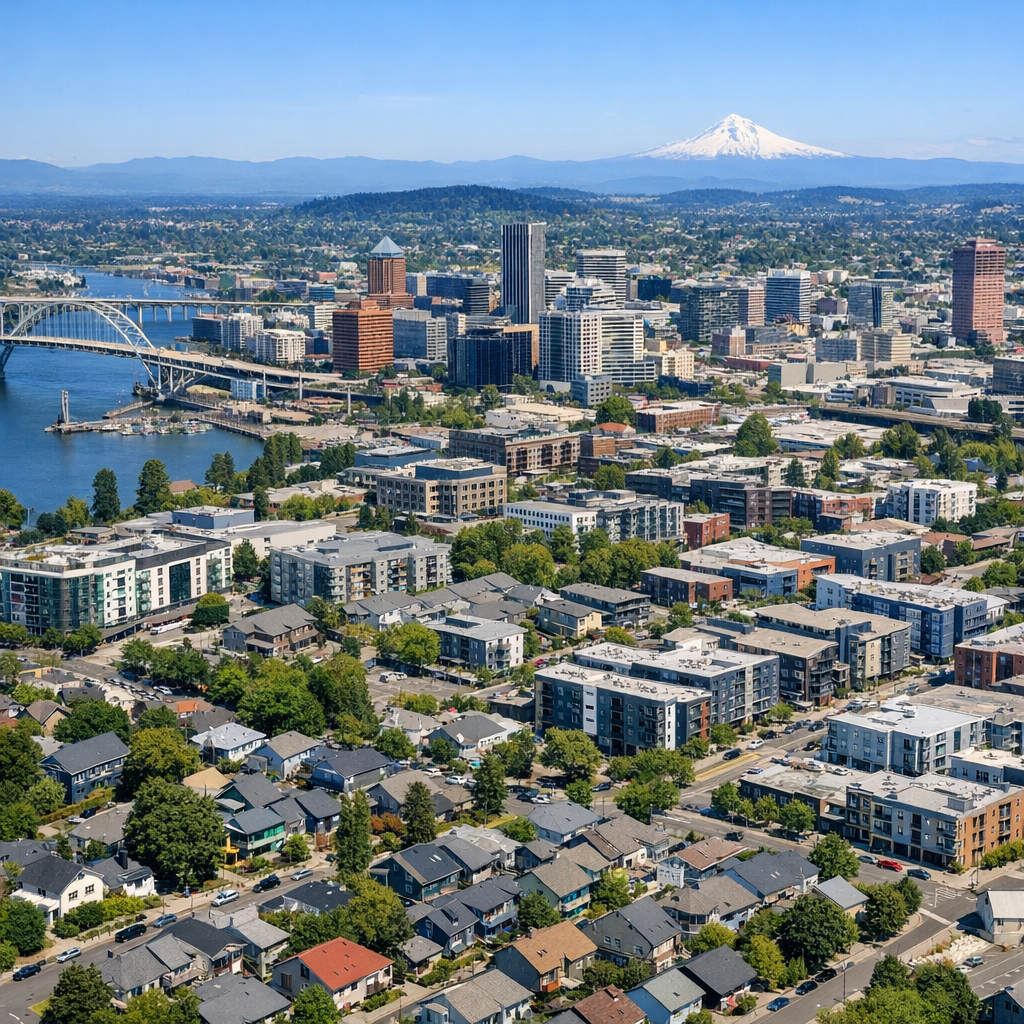
Portland’s housing market is experiencing a period of transformation, influenced by fluctuating home values, rental trends, and significant development initiatives. Understanding these dynamics is crucial for residents and prospective homeowners alike.
Current Housing Market Trends
As of April 2026, the average home value in Portland stands at $538,687, reflecting a slight decrease of 0.9% over the past year. Homes typically go pending in around 10 days, indicating a competitive market. The median sale price is $508,633, with 34.5% of sales closing above the list price, underscoring strong demand.
Rental Market Dynamics
Portland’s rental market has seen a modest decline, with average rents decreasing by 1.8% year-over-year to approximately $1,600 per month. Despite this reduction, renting remains more affordable than homeownership, where monthly costs average over $2,490. This affordability gap continues to influence housing choices among residents.
Notable Development Projects
Several development projects are contributing to Portland’s evolving housing landscape:
Lents 92H
Located along SE 92nd Avenue, Lents 92H is a two-phase housing development comprising 219 residential units. The project emphasizes pedestrian-friendly design and includes a mix of studios to three-bedroom apartments, aiming to support neighborhood growth through diverse housing options.
Argyle Gardens
Argyle Gardens offers 72 affordable housing units designed for individuals transitioning out of homelessness. Utilizing modular construction techniques, this development provides a co-living model with shared amenities, promoting community engagement and sustainability.
Mass Timber and Housing Innovation Campus
The Port of Portland is transforming a historical marine terminal into the Mass Timber and Housing Innovation Campus. This 39-acre site will feature a mass timber modular manufacturing facility, workforce training programs, and incubator spaces, aiming to advance innovation in affordable housing construction.
Policy and Housing Initiatives
Portland’s Residential Infill Project, adopted in 2021, has encouraged the development of “middle housing”—including duplexes, fourplexes, and accessory dwelling units. Since its implementation, approximately 23% of new homes have been classified as middle housing, contributing to increased density and housing diversity. However, recent data indicates a slowdown in overall housing construction, attributed to economic challenges such as high interest rates and inflation.
Understanding these market trends and development projects is essential for navigating Portland’s dynamic housing environment. Staying informed enables residents to make strategic decisions in a market characterized by both challenges and opportunities.