

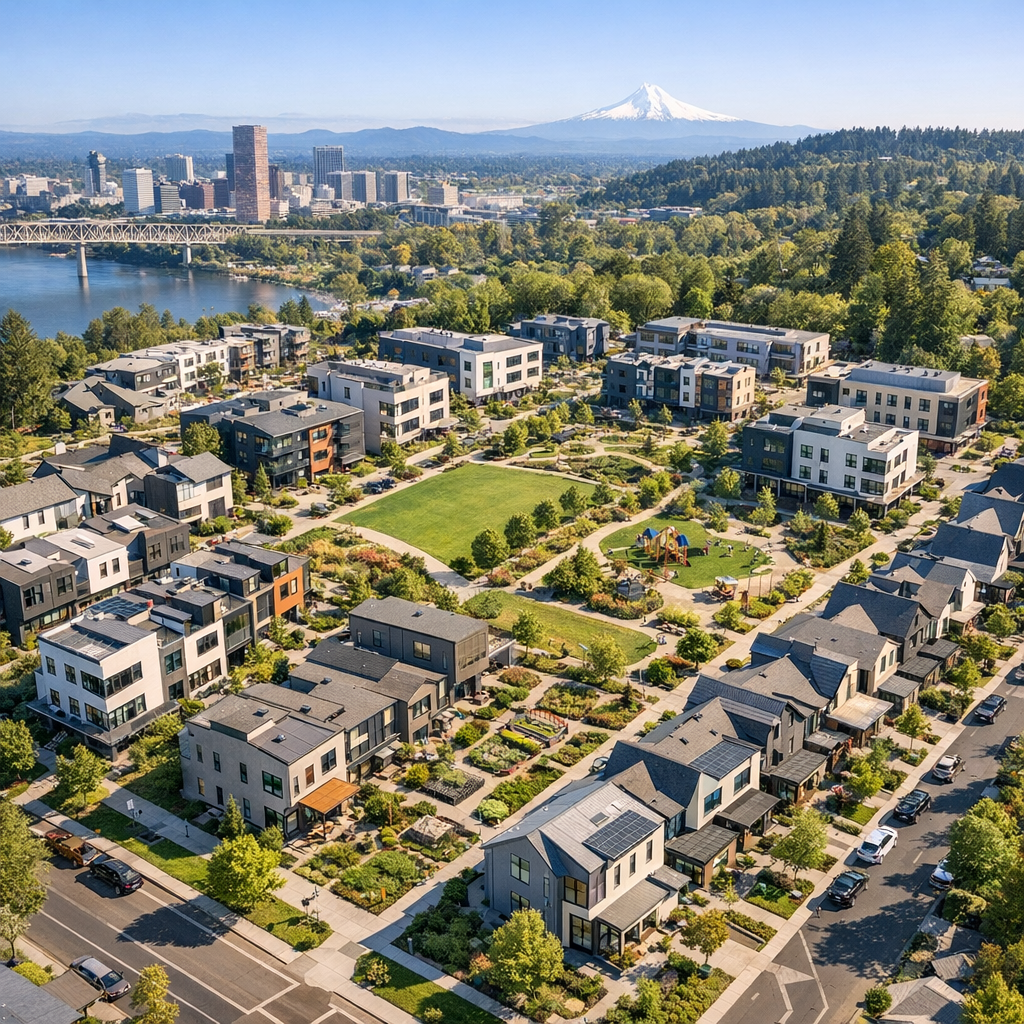
Portland’s housing market is undergoing significant transformations, influenced by shifting market dynamics, rental trends, and ambitious development projects. Understanding these changes is crucial for residents and prospective homeowners alike.
Current Housing Market Trends
As of mid-2026, Portland’s housing market exhibits a mix of stability and subtle shifts. The median sale price of homes stands at approximately $535,000, reflecting a modest 1.8% increase compared to the previous year. Homes typically receive around three offers and sell within an average of 14 days, indicating a competitive yet steady market. Notably, the average home value is $540,296, experiencing a slight 0.4% decrease over the past year, with properties going pending in about 10 days. These figures suggest a market that, while competitive, is not experiencing drastic fluctuations.
Rental Market Dynamics
The rental landscape in Portland has seen notable changes. The median rent price for new leases has decreased by 1.8% year-over-year, bringing the average to approximately $1,600 per month. Despite this decline, housing affordability remains a challenge for many residents. Additionally, the cost disparity between renting and owning has widened. The median monthly gross rent is nearly $1,770, whereas the monthly cost for mortgaged homes exceeds $2,490. This significant gap underscores the financial challenges associated with homeownership in the current economic climate.
Development Projects Shaping the Future
Portland is actively addressing housing needs through various development initiatives:
Lents 92H
Located along SE 92nd Avenue in East Portland, Lents 92H is a two-phase housing development comprising 219 residential units. The project offers a mix of studios, one-, two-, and three-bedroom apartments, emphasizing pedestrian-friendly design and durable materials. The first phase includes 171 units across two buildings, featuring ground-floor commercial spaces and shared amenities. A central landscaped green space aims to foster community interaction. The second phase will add 48 more residential units adjacent to the I-205 multi-use path.
Argyle Gardens
Argyle Gardens is an innovative affordable housing development designed for individuals transitioning out of houselessness. Utilizing modular construction techniques, the project offers 72 units in a co-living model. Sustainability is a key focus, with features like low-flow plumbing fixtures, drought-resistant landscaping, and a rooftop photovoltaic array. The development has earned an Earth Advantage Multifamily Platinum certification, reflecting its commitment to environmental responsibility.
73Foster
Situated in Southeast Portland, 73Foster is an affordable housing community comprising 64 apartments. Developed by REACH Community Development Inc., the property includes 22 units designated for permanent supportive housing and 42 units serving low-income residents earning at or below 60% of the area median income. The community features an outdoor landscaped courtyard designed for resident gatherings and relaxation.
Broadway Corridor
In partnership with Home Forward and the Urban League of Portland, the Broadway Corridor project aims to create 230 affordable apartments in the Pearl District. The development will offer a range of unit sizes, from studios to three-bedroom apartments, serving households with incomes between 30% and 60% of the area median income. Additionally, 35 units are designated as permanent supportive housing for individuals exiting homelessness. The project will also feature an early learning center, a workforce development center, and community spaces.
Glisan Landing
Located at NE 74th and Glisan in the Montavilla neighborhood, Glisan Landing comprises 147 apartments across two buildings. The development includes 41 studio apartments providing permanent supportive housing and 96 affordable homes ranging from studios to four-bedroom units. Approximately 41% of the units are available to individuals with incomes at or below 30% of the area median income.
Conclusion
Portland’s housing landscape is characterized by a blend of market stability, evolving rental dynamics, and proactive development efforts. While challenges persist, particularly in affordability, the city’s commitment to diverse housing solutions offers a hopeful outlook for residents and newcomers navigating the real estate environment.